What are Type 4, Type 5, Type 6 standards?
Type 4, Type 5 and Type 6 are European protective clothing classifications under CE Category III PPE, designed to protect workers against different levels of chemical and particulate hazards.
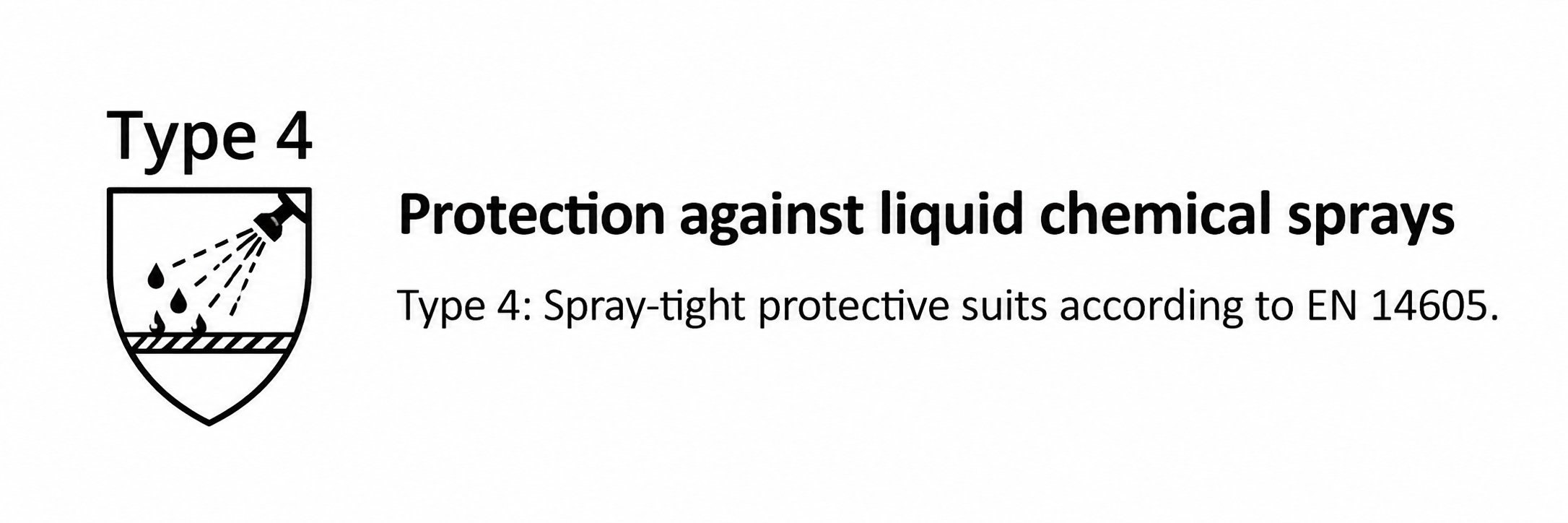
Type 4 – Spray-Tight Protection (EN 14605)
Protects against liquid chemical sprays. Type 4 coveralls are designed with spray-tight construction and sealed seams to help prevent liquid penetration.
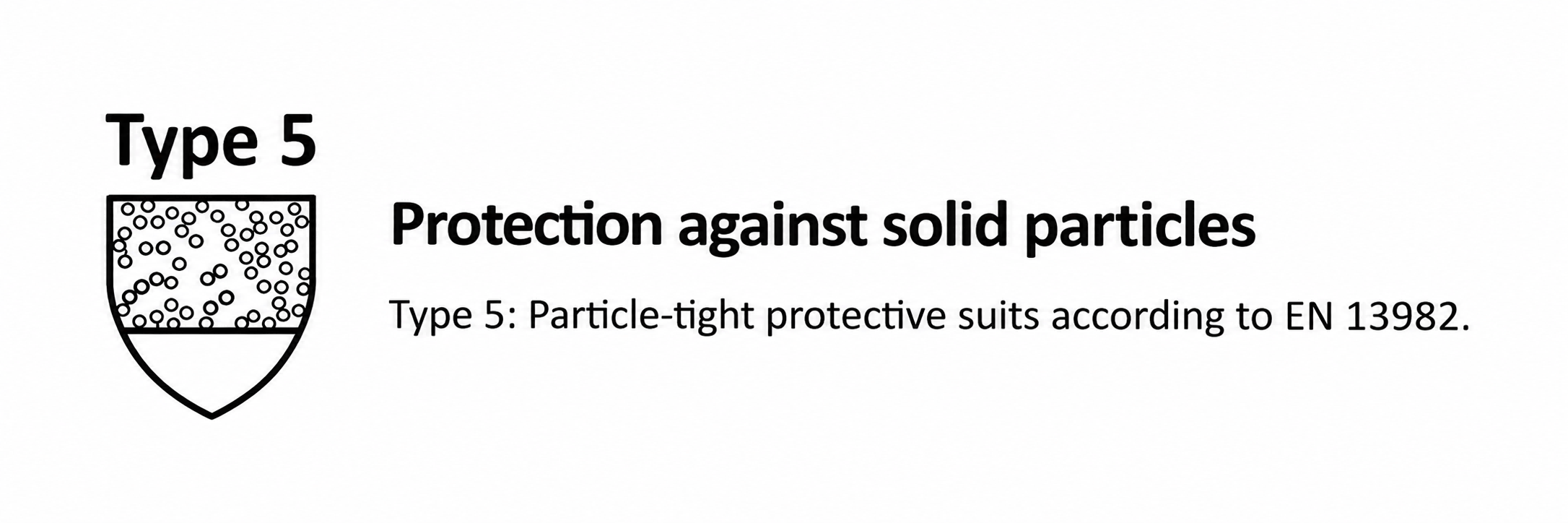
Type 5 – Airborne Solid Particulate Protection (EN ISO 13982-1)
Protects against hazardous airborne solid particulates, helping reduce the risk of particle penetration into the protective clothing.
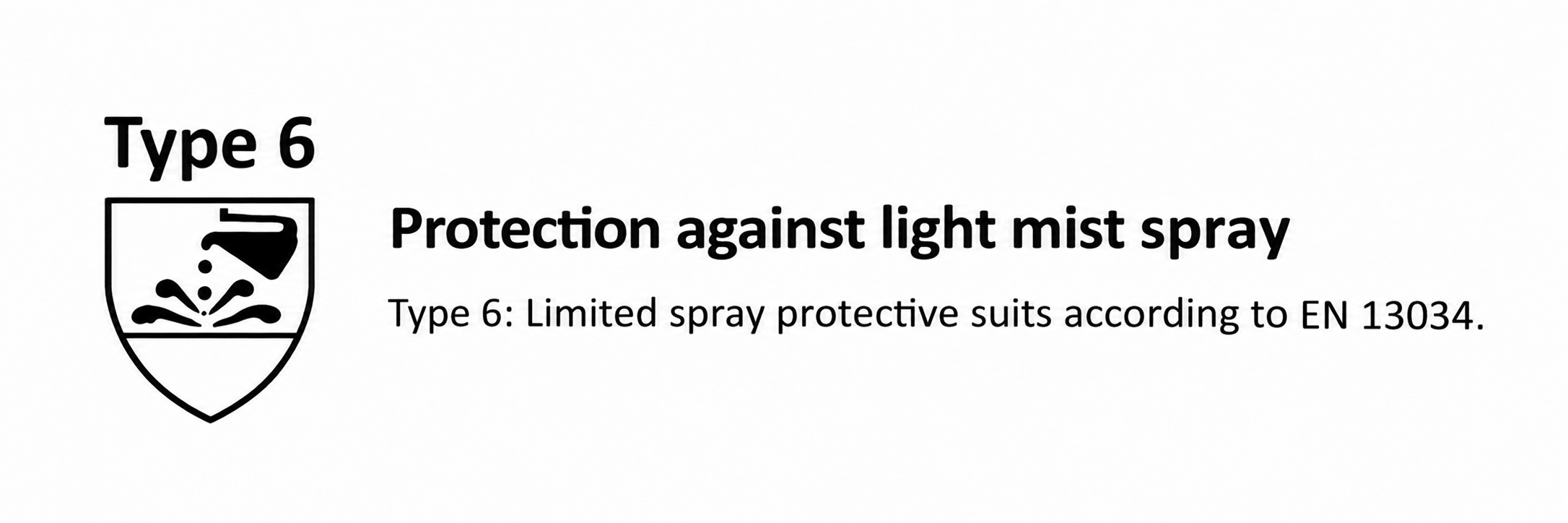
Type 6 – Limited Liquid Splash Protection (EN 13034)
Provides limited protection against light liquid chemical splashes and low-level spray exposure where a complete liquid permeation barrier is not required.

Typical Applications
Applications
Asbestos removal, stripping, clear up or handling -Pharmaceutical manufacturing -Painting & spraying -Industrial manufacturing & maintenance-Mining, wood & metal processing-Electronic assembly & insulation laying
What’s the difference between type 5&6 and disposable microporous material?
What’s the different craft of type 5&6 coverall and disposable microporous coverall?
The main difference between Craft of type 5&6 coveralls and disposable microporous coveralls lies in their material construction, durability, and intended use.
Craft of type 5&6 coveralls:
1. Material: Craft of type 5&6 coveralls are usually made of a multi-layered fabric laminate material, which offers protection against liquid chemicals (Type 6) and airborne solid particulates (Type 5). The fabric is typically robust and durable.
2. Durability: These coveralls are designed for multiple uses since they have reinforced seams and stronger materials that are resistant to tearing and abrasion.
3. Protection: They provide a higher level of protection against liquid chemicals and airborne solid particulates, making them suitable for applications where there is a risk of exposure to hazardous substances, such as handling chemicals, asbestos, or paint spraying.
4. Reusability: Craft of type 5&6 coveralls can be washed and reused several times, as long as they are in good condition and not damaged.
Disposable microporous coveralls:
1. Material: Disposable microporous coveralls are constructed from a lightweight and breathable microporous film or non-woven fabric. They have small pores that allow air and moisture vapor to pass through, making them comfortable to wear for extended periods.
2. Durability: These coveralls are intended for single-use only and are generally less durable compared to Craft of type 5&6 coveralls. They are not designed for heavy-duty or repeated use.
3. Protection: Disposable microporous coveralls offer limited protection against liquid chemicals and fine particulates. They are suitable for applications where there is a lower risk of exposure, such as non-hazardous dust environments, general maintenance work, or light cleaning tasks.
4. Disposability: These coveralls are designed to be discarded after a single use, reducing the risk of contamination and ensuring cleanliness for the next use.
In summary, Craft of type 5&6 coveralls provide higher durability and protection against hazardous substances, making them suitable for applications involving chemicals or particulates. Disposable microporous coveralls are lightweight and breathable, but they offer limited durability and protection, making them suitable for less hazardous environments and single-use applications.